Scientific Papers
These papers develop different aspects of the Spectral Framework, from its empirical and predictive structure to its methodological and epistemological implications.
How to Read These Papers
The Spectral Framework asks the reader to briefly set aside conventional physics and chemistry and look directly at the measured spectral data and their relations. If your initial interpretation is “This is just curve fitting/correlation”, “This does not explain the mechanism”, or “The spectral variables already contain the physics”, we recommend first reading “Beyond Representation”, which makes these interpretive assumptions explicit. If you are using AI to analyze the papers, we recommend uploading “Beyond Representation” alongside them, since AI systems inherited these human interpretive assumptions.
All these papers use primarily two measured spectral variables to organize, explain and predict atomic systems through simple linear and power-law relations. We invite the reader to consider this level of predictive compression and cross-system generality, and to compare it with the theoretical complexity required by current models to describe the same systems.
The papers are preferably read as an interconnected body of work. Readers unfamiliar with the framework are encouraged to begin with the technical papers, which present the primary empirical evidence upon which the subsequent methodological and epistemological analyses are based. Paper 1 establishes the common empirical framework and spectral coordinate. Papers 2 and 3 address spectral scaling and its predictive implications for heavy and superheavy elements, while Papers 4 and 5 address the differentiation and recurrence of atomic periodicity. Paper 6 extends the framework to black-body radiation and physical constants.
Empirical Evidence
Universal Spectral Scaling and Hierarchical Organization in Atomic Spectra
Jan. 27, 2026
This paper demonstrates that atomic spectra, hydrogen spectral families, and fine structure all follow the same underlying spectral scaling organization, revealing a shared global structure across atomic systems.
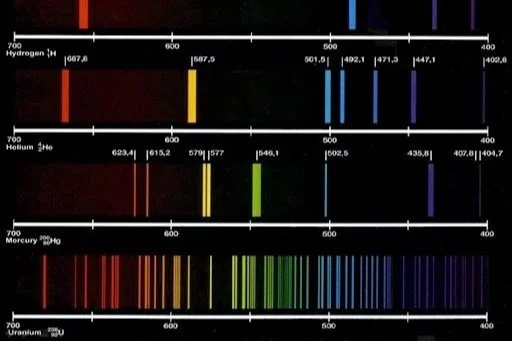
A scale-invariant spectral spacing law predicts atomic K-edge frequencies of heavy and superheavy elements (Z = 100–150) without relativistic input
May 20, 2026
Shows that the K-edge energies of elements across the heavy regime can be predicted progressively from one atom to the next using a simple linear spectral law. The paper makes specific predictions for previously unknown superheavy elements, including oganesson, without conventional quantum and relativistic corrections.

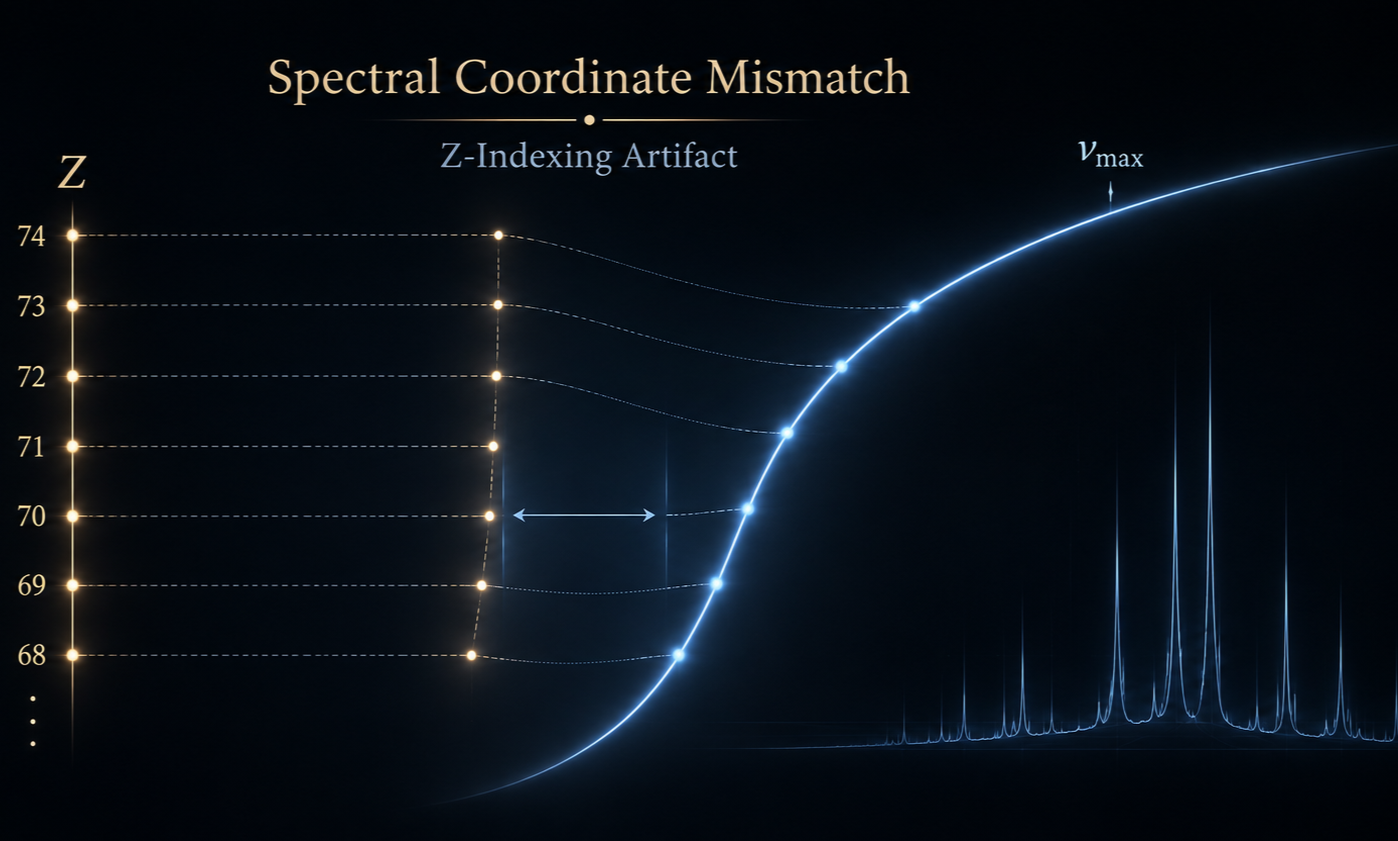
Empirical Evidence that Dirac–Fock Relativistic and Quantum Corrections are Z-indexing Artifacts
September 8, 2026
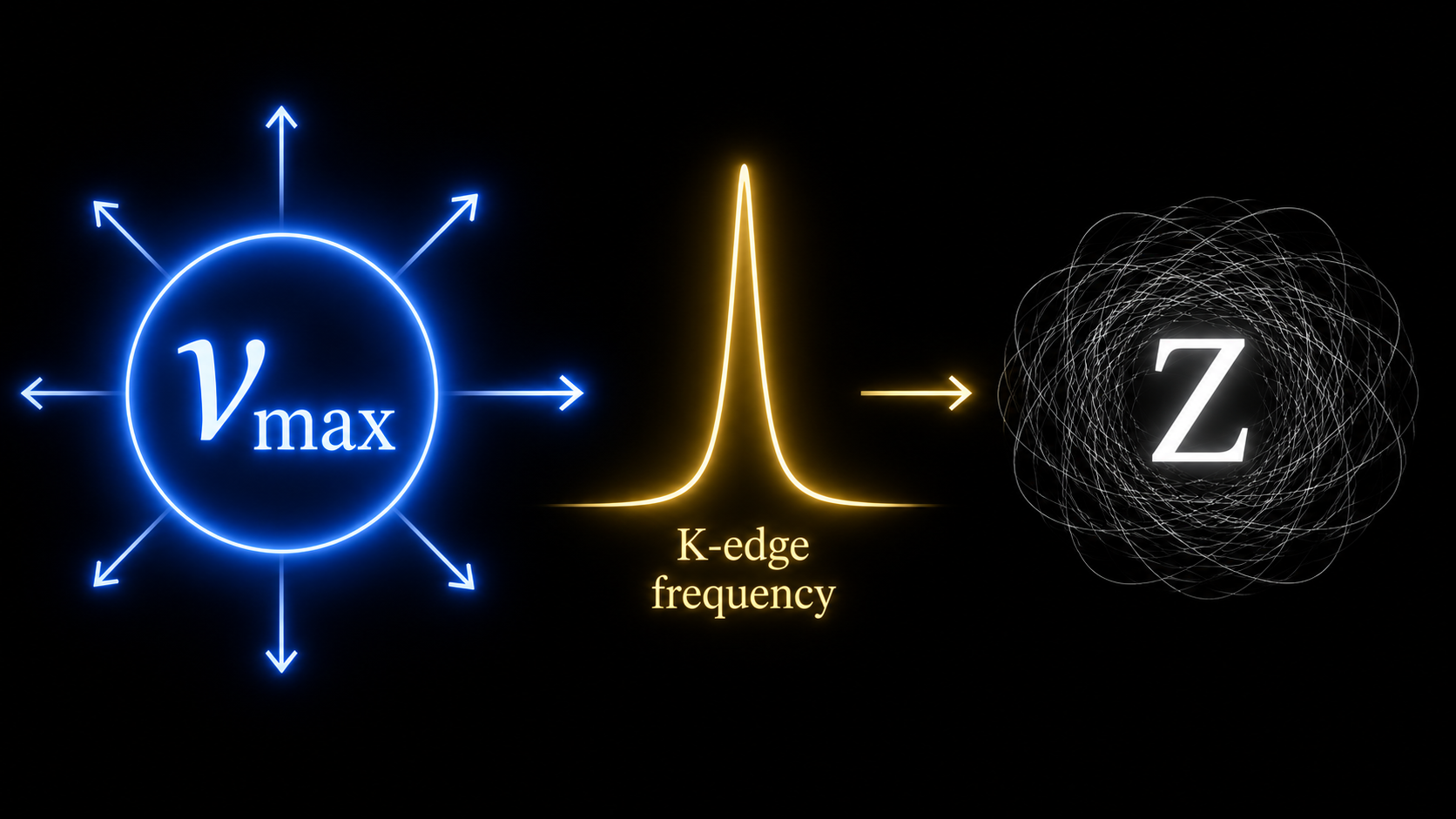
Elements are usually organized by Z, their atomic number, but can instead be organized by measured K-edge frequency, Vmax, which provides a metric spectral coordinate. Z tracks the ordering of Vmax but does not preserve its spacing. Quantifying this mismatch reproduces the corrections normally attributed to high-Z relativistic and quantum effects, identifying them as Z-indexing artifacts and not physical effects in the atom. The mismatch predicts the theoretical values without using theory and explains why Z works and where and why it fails at high frequencies.
Atomic Periodicity as Spectral Structure
March 27, 2026
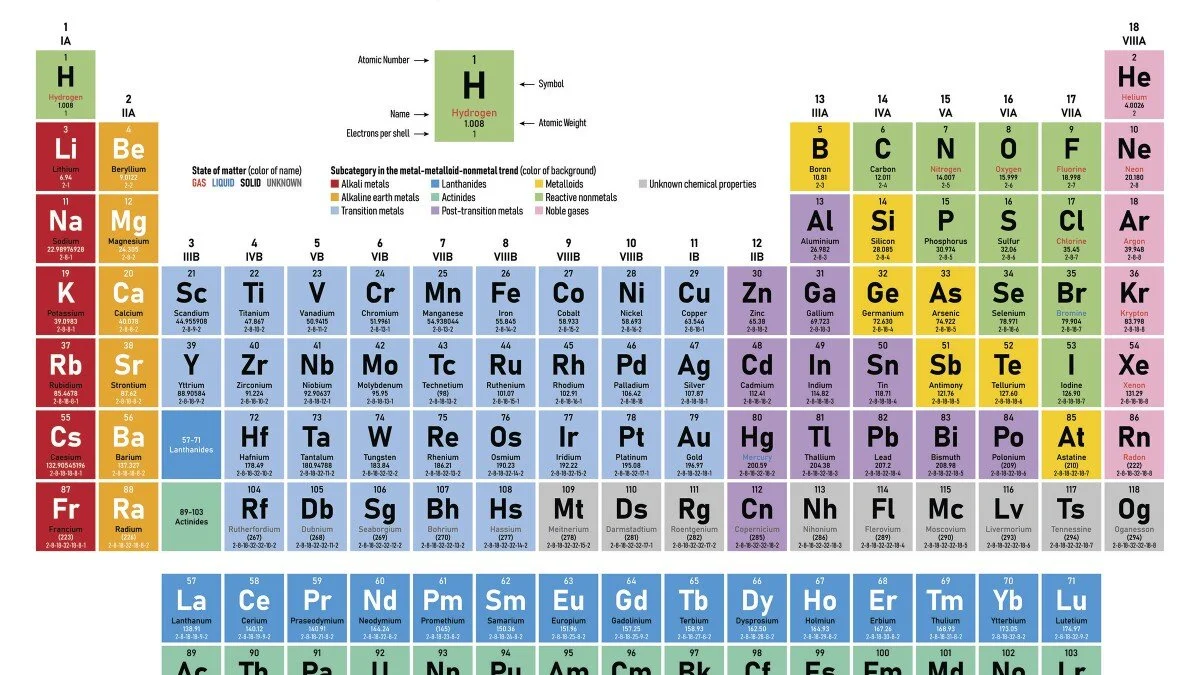
Shows that the full structure of the periodic table can be recovered directly from atomic spectra alone, without using atomic number, electron configurations, or chemical assumptions. A two-parameter spectral map (K-edge versus first ionization frequency) organizes periods into bands and groups into parallel power law trajectories , and reveals both chemical and physical behavior of atoms.
A spectral reset law explains and predicts periodic recurrence in the elements
August 14, 2026
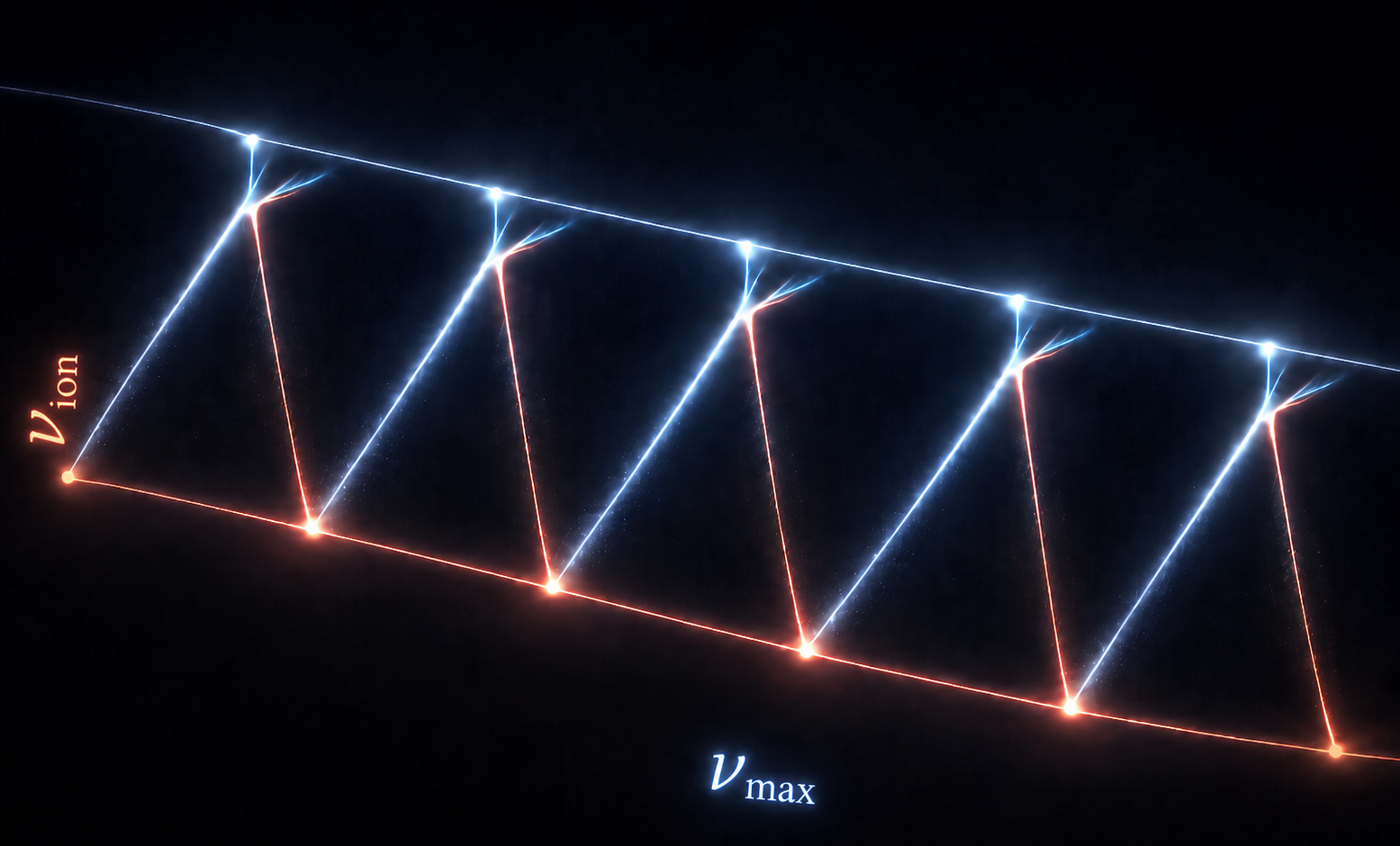
This paper reveals a measurable spectral law for periodic recurrence. Across each period, ionization frequency rises; at the boundary, spectral modes split and the ionization frequency resets, nearly cancelling that rise. Starting from lithium, this rise–split–reset law reproduces known recurring period anchors and predicts period-8 and period-9 anchors, including elements 119, 168, 169 and 218.
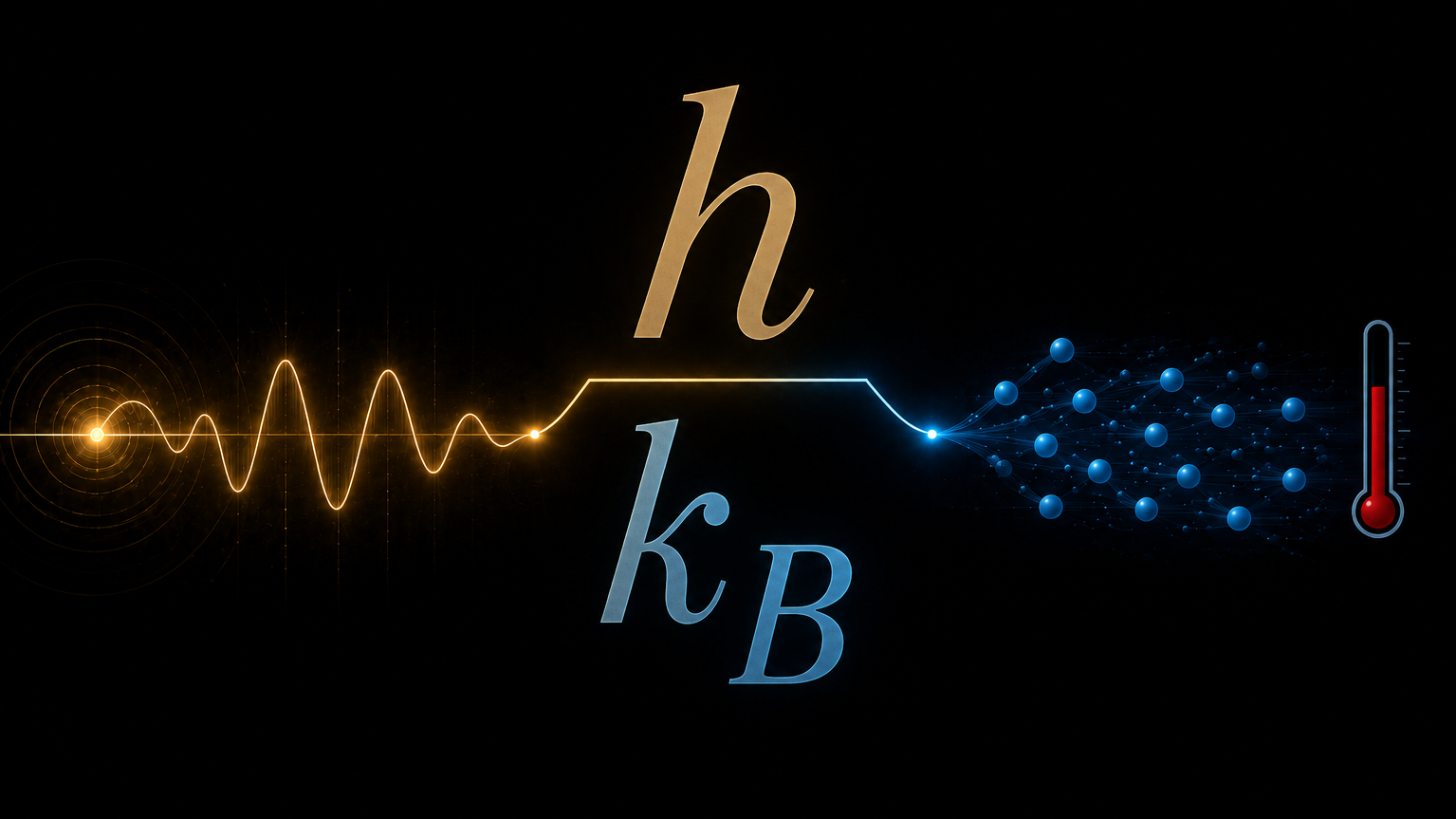
Recovery of the Planck–Boltzmann Ratio (h/k_B) from Non-Closure in Blackbody Spectral–Temperature Relations
Jan. 27, 2026
Shows that physical constants such as the Planck–Boltzmann ratio and the Wien displacement factors can be recovered directly from empirical spectral relations, without assuming quantization or statistical-mechanical models. These constants are revealed as intercept residuals of the spectral-temperature relation, meaning that they only appear when empirical spectral quantities, such as frequencies, are mapped into a temperature representation.
Methodological Foundations, and Epistemological Implications
The technical papers revealed an unexpectedly simple empirical spectral organization underlying diverse physical phenomena. The following papers examine three broader questions: What do these empirical results imply? Why was this organization historically overlooked? And why do spectral relations emerge so naturally from the operational foundations of measurement itself?
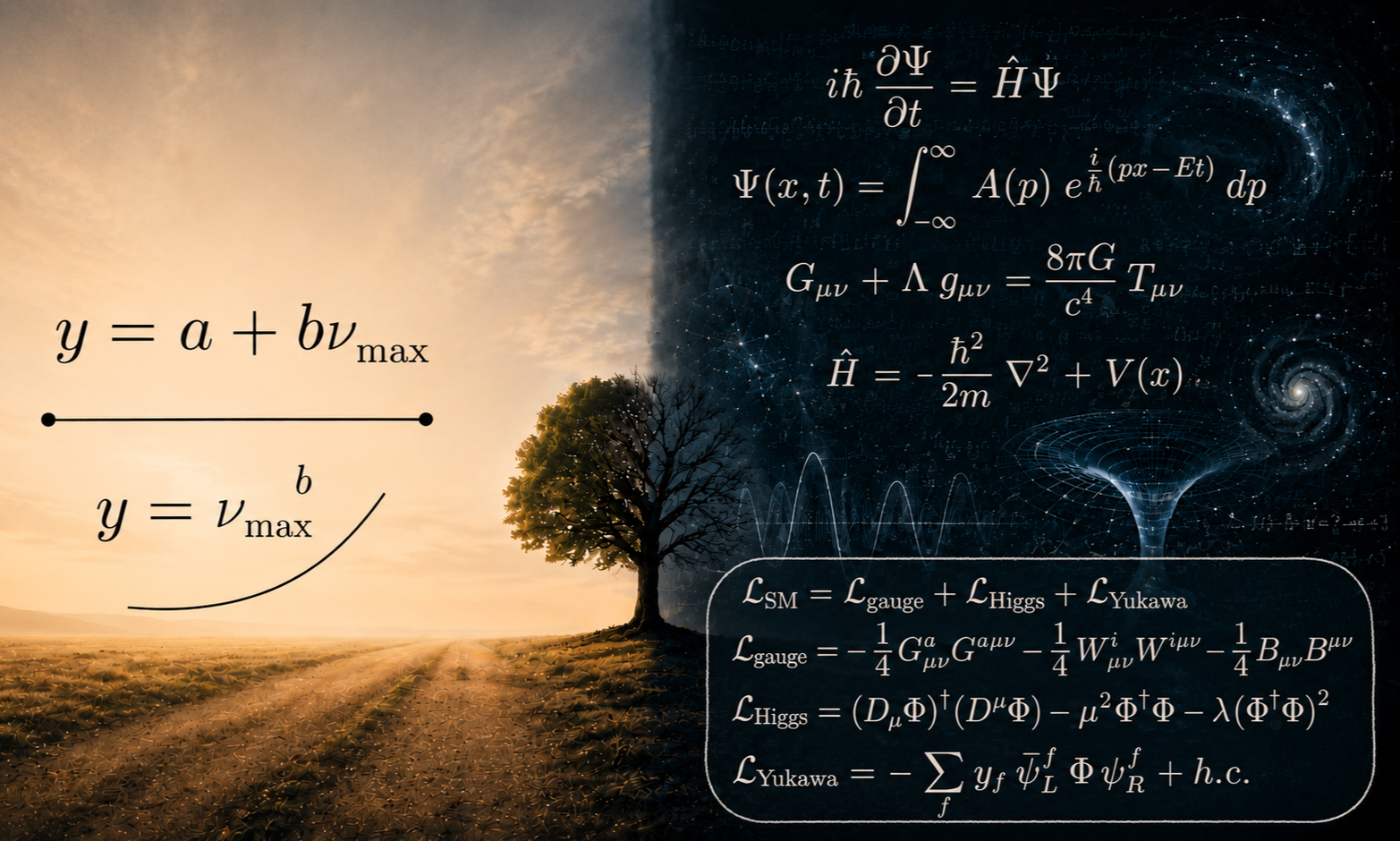
Beyond representation: Toward a Foundational Science
May 28, 2026
Recent large-scale analysis of NIST spectral data suggest that the empirical spectral structure is low-dimensional and is sufficient for classification, explanation, generalization, and prediction prior to any ontological representation or theoretical model. If the observable empirical structure is sufficient, why is a mechanistic description with unobservable particles and forces instinctively considered a deeper explanation rather than merely a translation into a cognitively preferred narrative? This paper examines these questions through the concept of representational debt in science, and offers a path towards a Foundational Science concerned not with ontological entities or local causal mechanisms, but with invariant empirical relations, scaling laws, and structural constraints. The Universe does not owe us a story.
It is Time to Talk about Z
June 8, 2026
Atomic number has organized our understanding of the elements for more than a century and is widely regarded as a fundamental property of matter. Across multiple independent studies, we show that atomic spectra are organized more naturally by a measured spectral boundary contained within the spectra themselves than by atomic number. This boundary reveals periodic organization, scaling laws that enable prediction of different atomic properties using only two parameters, and structures and relationships that are hidden or distorted in atomic-number representations. More broadly, the results illustrate how changing coordinates can reveal hidden structure and a simplicity in nature.
On the relational periodic nature of measurement and physical structure
May 27, 2026
We do not measure relative to time; we construct time from calibrated relations to periodic physical processes. This paper re-examines the concepts of time, measurements and physical structure from a metrological perspective, and argues that relational periodicity is central to measurement because it is inherited from the physical structure upon which quantitative comparison depends.

The Synesthete’s Confusion: Domain Projection and the Origin of Physical Constants
June 2, 2026
Recent empirical analysis shows that the Planck-Boltzmann ratio h/kB appears neither in the spectral observables nor in temperature itself, but only in the mapping between them, suggesting that it acts as a global consistency factor required to reconcile the different mappings. This raises a deeper question: is it describing the empirical structure being observed, or the mapping used to represent it? More generally, are physical constants merely scaling factors between equivalent domains of description, or do they connect fundamentally different domains? This paper answers these questions through the concept of Domain Projection and discuss its implications for the interpretation of physical constants, physical laws, and the foundations of scientific description.